Resistivity/GPR analysis
We conduct resistivity and ground-penetrating radar (GPR) research and applications to topsoil properties, as complementary data to the seismic analysis.


Resistivity surveys
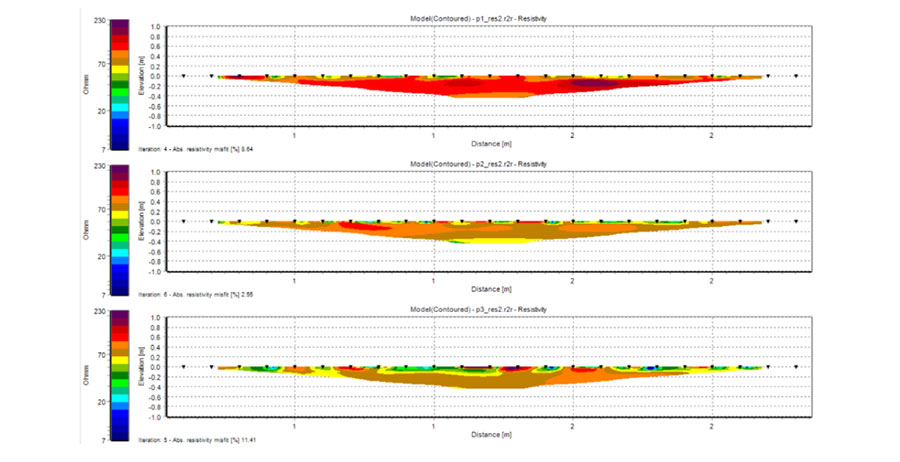
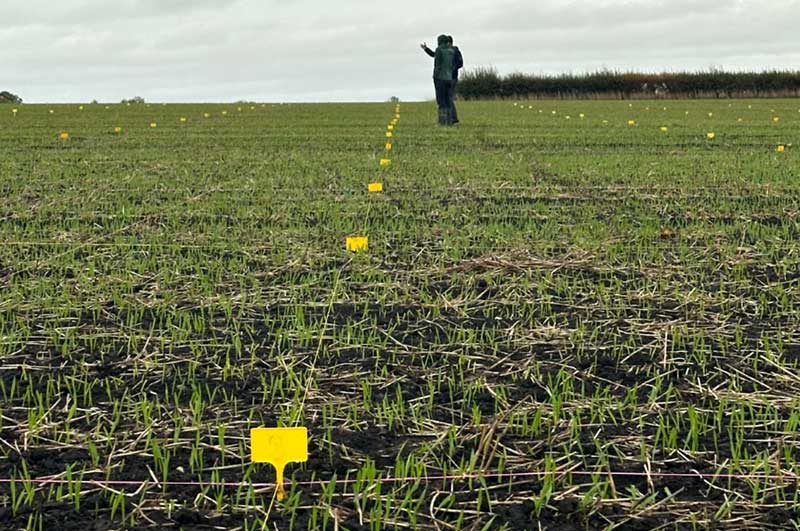
At Wyke Farm in Devon, UK, we conducted experimental resistivity surveys to explore soil properties and variability across different land-use zones. The survey areas included:
Surface resistivity values in the arable field showed high variability, potentially due to both the reduced moisture and electrode contact resistance, making it difficult to distinguish between soil properties and measurement noise. We're actively working on improving sensor technology and methodologies to address these challenges and achieve more accurate readings.
Advantages of Resistivity in Agriculture
• High-Resolution Mapping: Resistivity surveys provide cm-level resolution, allowing for detailed soil structure and moisture mapping, which is essential for precision agriculture.
• Complementary to Seismic Data: The resistivity data can be easily integrated with seismic measurements, helping to constrain models and improve the accuracy of subsurface soil mapping.
• Non-Invasive and Cost-Effective: This method allows for large-scale, non-invasive monitoring without disturbing the soil, making it both cost-effective and efficient for field studies.
Future resistivity directions
We plan to continue refining our sensor technology and methodologies to reduce surface contact issues and improve measurement accuracy. These ongoing surveys will help us better understand soil variability and improve agricultural practices.
Ground penetrating radar
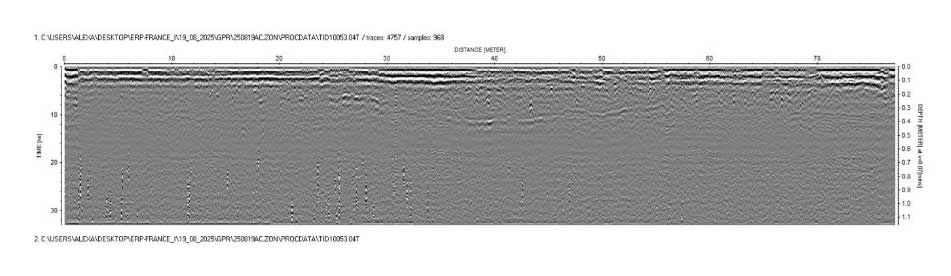
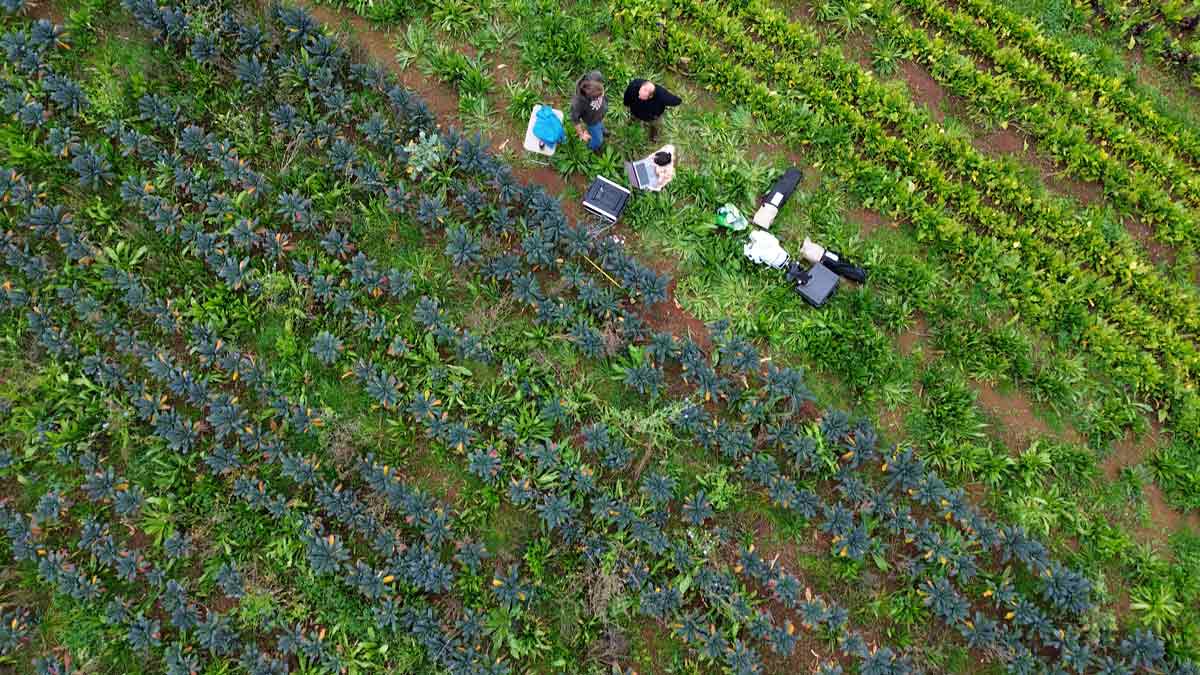
At a vineyard in France, we utilized Ground Penetrating Radar (GPR) to investigate the subsurface of sandy soils, which are often dry and rocky. The primary advantage of GPR is its ability to be dragged along the surface, making it an efficient and fast method for surveying even in hard, challenging soils.
Future GPR prospects
Our ongoing research will further refine how GPR can be integrated with seismic and other geophysical methods and used for different crop types and soil conditions. This will help us improve agricultural practices and tailor interventions more precisely.