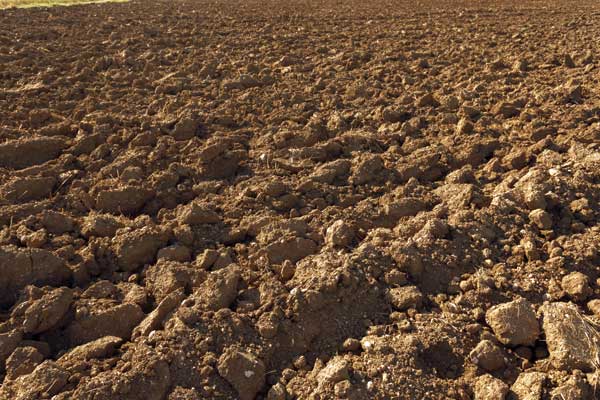
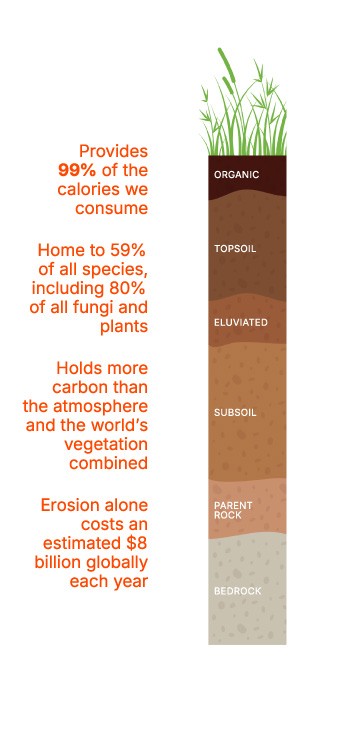
Soil is one of the Earth’s most important yet least understood ecosystems.
It provides 99 percent of the calories we consume, holds more carbon than the atmosphere and all vegetation combined, and harbours most of the planet’s biodiversity. Yet despite its central role in sustaining life, soil has long been disregarded and neglected
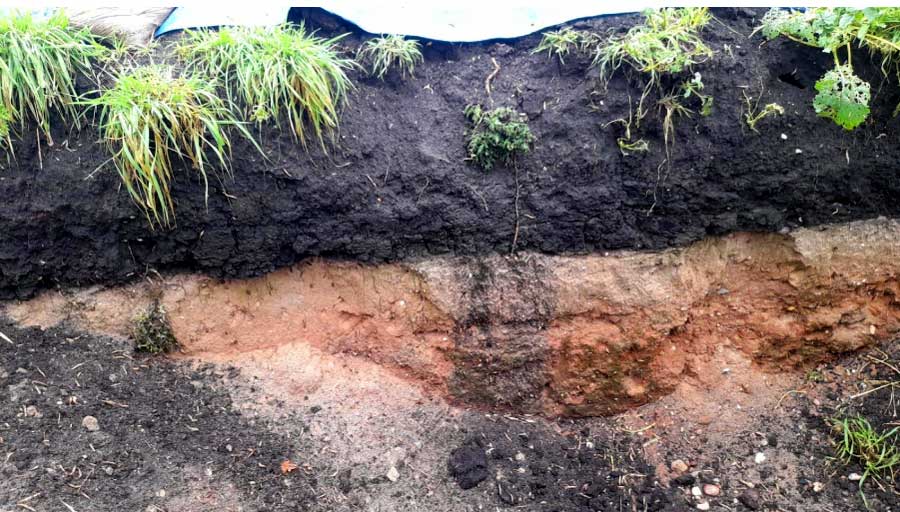
Soils hold more carbon than all living biomass combined
Soil is one of the Earth’s most important yet least understood ecosystems.
It provides 99 percent of the calories we consume, holds more carbon than the atmosphere and all vegetation combined, and harbours most of the planet’s biodiversity. Yet despite its central role in sustaining life, soil has long been disregarded and neglected
Soils hold more carbon than all living biomass combined
Soil is one of the Earth’s most important yet least understood ecosystems.
It provides 99 percent of the calories we consume, holds more carbon than the atmosphere and all vegetation combined, and harbours most of the planet’s biodiversity. Yet despite its central role in sustaining life, soil has long been disregarded and neglected
Soils hold more carbon than all living biomass combined
Traditional soil monitoring is slow, costly and invasive.
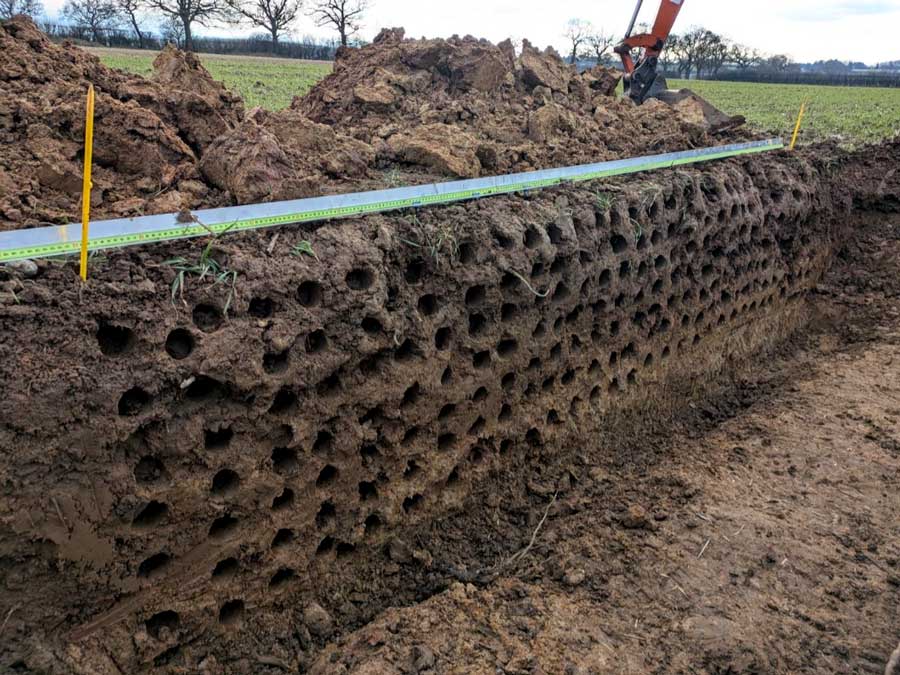
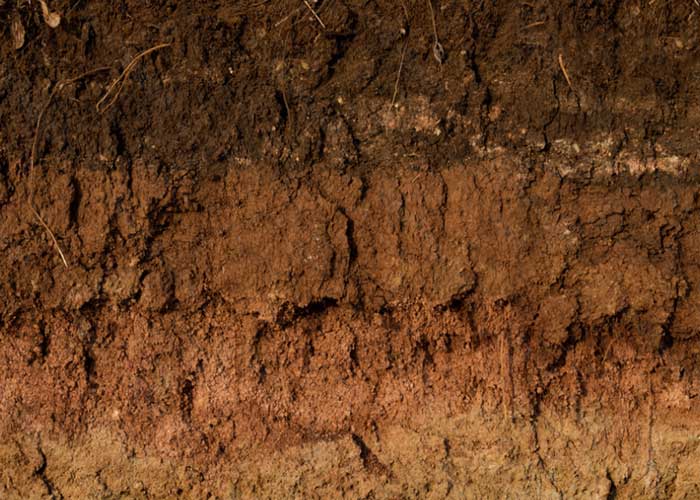
The Scientific Challenge
Soil science is challenging because soil itself is complex.
Soil is a biological structure built by the organisms that inhabit it. Its properties arise from the interaction of lifeforms, materials and environmental conditions, all of which vary greatly from place to place. Because it is difficult to investigate without damaging its structure, scientists struggle to measure soil health at the scale and precision required to address the global soil crisis. Traditional methods are costly, invasive and slow, producing fragmented data. To see into soils clearly we need tools that can decode the inner workings of soil in ways that are fast, scalable, non-invasive and accessible to all.
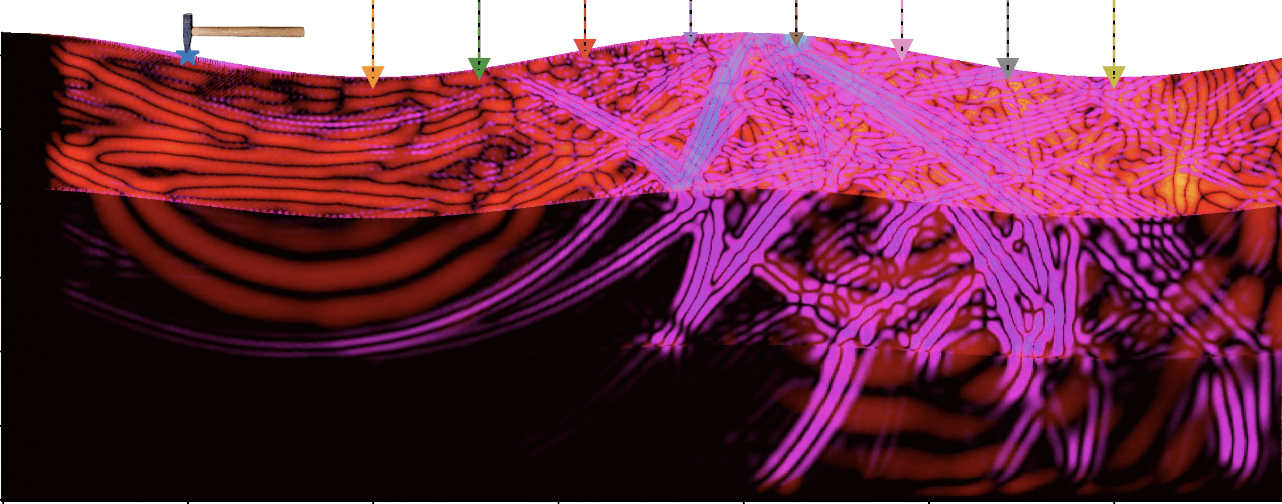
Soilsmology adapts the principles of seismology to observe soil’s vital signs non invasively and at depth, offering a new way to understand soil’s structure and function in quasi real time.
Traditional soil monitoring is slow, costly and invasive.
The Scientific Challenge
Soil science is challenging because soil itself is complex.
Soil is a biological structure built by the organisms that inhabit it. Its properties arise from the interaction of lifeforms, materials and environmental conditions, all of which vary greatly from place to place. Because it is difficult to investigate without damaging its structure, scientists struggle to measure soil health at the scale and precision required to address the global soil crisis. Traditional methods are costly, invasive and slow, producing fragmented data. To see into soils clearly we need tools that can decode the inner workings of soil in ways that are fast, scalable, non-invasive and accessible to all.
Soilsmology adapts the principles of seismology to observe soil’s vital signs non invasively and at depth, offering a new way to understand soil’s structure and function in quasi real time.
Traditional soil monitoring is slow, costly and invasive.
The Scientific Challenge
Soil science is challenging because soil itself is complex.
Soil is a biological structure built by the organisms that inhabit it. Its properties arise from the interaction of lifeforms, materials and environmental conditions, all of which vary greatly from place to place. Because it is difficult to investigate without damaging its structure, scientists struggle to measure soil health at the scale and precision required to address the global soil crisis. Traditional methods are costly, invasive and slow, producing fragmented data. To see into soils clearly we need tools that can decode the inner workings of soil in ways that are fast, scalable, non-invasive and accessible to all.
Soilsmology adapts the principles of seismology to observe soil’s vital signs non invasively and at depth, offering a new way to understand soil’s structure and function in quasi real time.
SOIL STRUCTURE
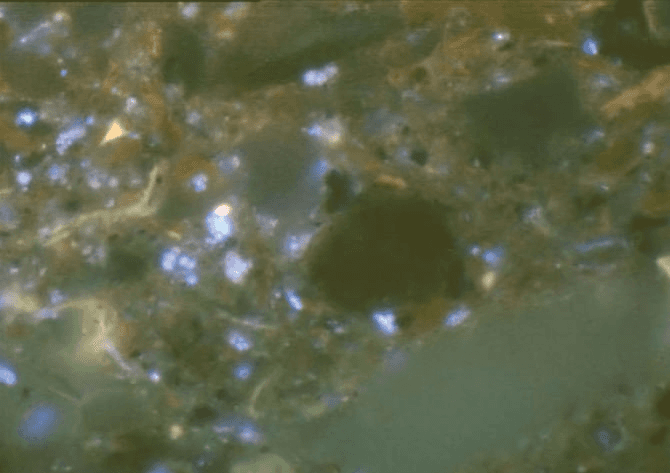
The intricate soil structure, moulded by microbes, plays a pivotal role in supporting life.
Soil is home to at least 59 percent of all species, including more than 80 percent of fungi and plants, making it the most biodiverse habitat on Earth. Much like a coral reef, it is a biological structure with intricate and interconnected relationships between the organisms that inhabit it.
A dense network of pores allows the movement of water, air and nutrients. In many soils the weight of living organisms belowground exceeds the weight of all life above it. Microbial and fungal activity builds stable aggregates that shelter this extraordinary diversity and shape the structure on which soil health depends.
© Karl Ritz
SOIL STRUCTURE
The intricate soil structure, moulded by microbes, plays a pivotal role in supporting life.
Soil is home to at least 59 percent of all species, including more than 80 percent of fungi and plants, making it the most biodiverse habitat on Earth. Much like a coral reef, it is a biological structure with intricate and interconnected relationships between the organisms that inhabit it.
A dense network of pores allows the movement of water, air and nutrients. In many soils the weight of living organisms belowground exceeds the weight of all life above it. Microbial and fungal activity builds stable aggregates that shelter this extraordinary diversity and shape the structure on which soil health depends.
© Karl Ritz
SOIL STRUCTURE
The intricate soil structure, moulded by microbes, plays a pivotal role in supporting life.
Soil is home to at least 59 percent of all species, including more than 80 percent of fungi and plants, making it the most biodiverse habitat on Earth. Much like a coral reef, it is a biological structure with intricate and interconnected relationships between the organisms that inhabit it.
A dense network of pores allows the movement of water, air and nutrients. In many soils the weight of living organisms belowground exceeds the weight of all life above it. Microbial and fungal activity builds stable aggregates that shelter this extraordinary diversity and shape the structure on which soil health depends.
© Karl Ritz
SEEING INTO THE SOIL
Soil is the fragile cushion between rock and air on which our civilisations are built. Despite supplying 99% of our calories, it's the least known major ecosystem.
Healthy soil forms only 1 centimetre every 500 years
© John Crawford, Andy Neal and Sacha Mooney
SEEING INTO THE SOIL
Soil is the fragile cushion between rock and air on which our civilisations are built. Despite supplying 99% of our calories, it's the least known major ecosystem.
Healthy soil forms only 1 centimetre every 500 years
© John Crawford, Andy Neal and Sacha Mooney
SEEING INTO THE SOIL
Soil is the fragile cushion between rock and air on which our civilisations are built. Despite supplying 99% of our calories, it's the least known major ecosystem.
Healthy soil forms only 1 centimetre every 500 years
© John Crawford, Andy Neal and Sacha Mooney
Traditional soil monitoring is slow, costly and invasive.
The Crucial Role of Soil Structure
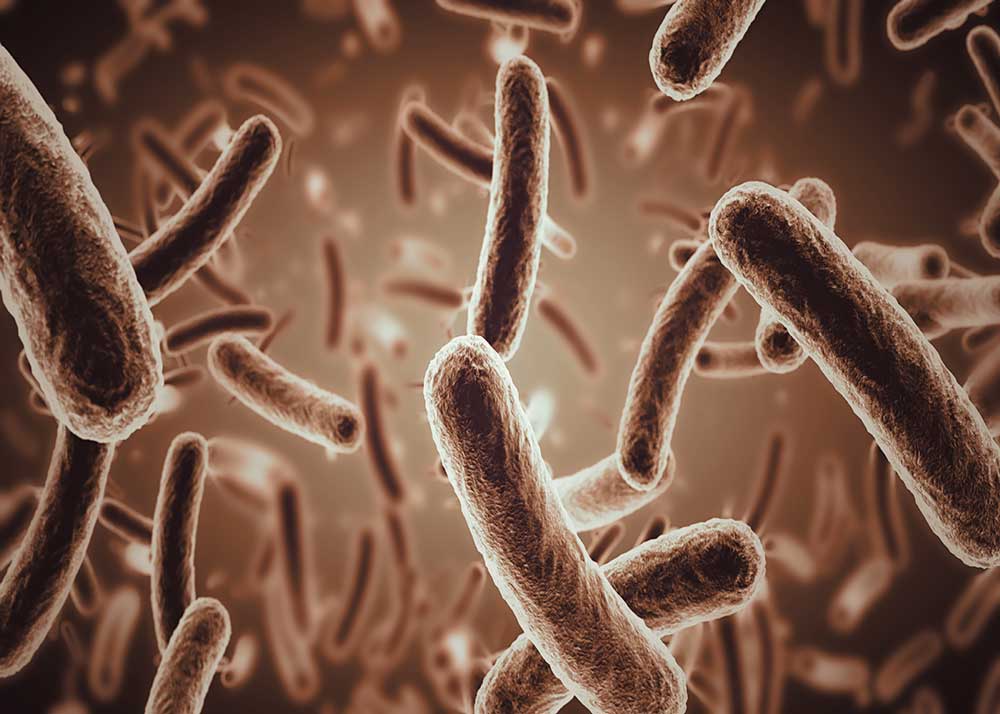
Over time, microbes create an ever more complex soil architecture.
Healthy soil typically contains around 50 percent pore space. This structure allows soils to withstand droughts and floods and to support roots and microbial life. When soil becomes degraded through compaction, erosion or poor agricultural practices, this structure collapses. Reduced pore space limits water infiltration and gas exchange, root growth is restricted and yields decline. Degraded soils also lose carbon and biodiversity and become more vulnerable to further damage
Understanding how soil structure forms and changes is essential for sustaining ecosystems and building resilience in food production.
Traditional soil monitoring is slow, costly and invasive.
The Crucial Role of Soil Structure
Over time, microbes create an ever more complex soil architecture.
Healthy soil typically contains around 50 percent pore space. This structure allows soils to withstand droughts and floods and to support roots and microbial life. When soil becomes degraded through compaction, erosion or poor agricultural practices, this structure collapses. Reduced pore space limits water infiltration and gas exchange, root growth is restricted and yields decline. Degraded soils also lose carbon and biodiversity and become more vulnerable to further damage
Understanding how soil structure forms and changes is essential for sustaining ecosystems and building resilience in food production.
Traditional soil monitoring is slow, costly and invasive.
The Crucial Role of Soil Structure
Over time, microbes create an ever more complex soil architecture.
Healthy soil typically contains around 50 percent pore space. This structure allows soils to withstand droughts and floods and to support roots and microbial life. When soil becomes degraded through compaction, erosion or poor agricultural practices, this structure collapses. Reduced pore space limits water infiltration and gas exchange, root growth is restricted and yields decline. Degraded soils also lose carbon and biodiversity and become more vulnerable to further damage
Understanding how soil structure forms and changes is essential for sustaining ecosystems and building resilience in food production.
Bulk density and topsoil depth are rarely measured directly
USING SEISMOLOGY
To restore soil health we need accurate data at depth and across space.
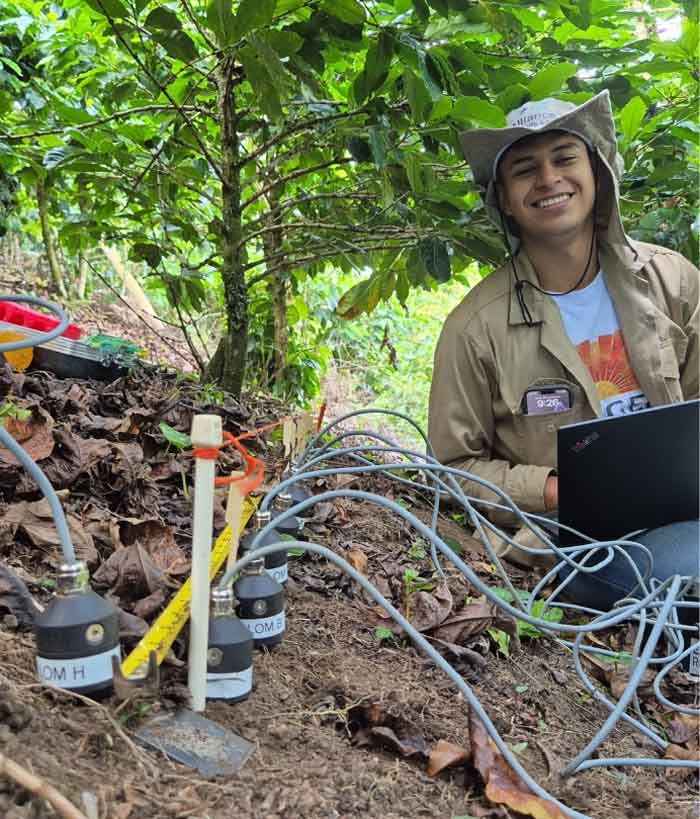
Soilsmology provides a scalable and non invasive method for mapping soil properties. By passing ultrahigh frequency seismic waves through the soil we can observe structure, moisture, bulk density and connected porosity without digging or disturbing the ground. This enables detailed measurements that are fast, affordable and accessible to a wide range of users, from farmers to scientists and land managers
As these tools expand, soilsmology can help support more accurate carbon assessments, improved land management and regenerative agricultural practices that protect yields while reducing environmental impact.
Traditional soil monitoring is slow, costly and invasive.
USING SEISMOLOGY
To restore soil health we need accurate data at depth and across space.
Soilsmology provides a scalable and non invasive method for mapping soil properties. By passing ultrahigh frequency seismic waves through the soil we can observe structure, moisture, bulk density and connected porosity without digging or disturbing the ground. This enables detailed measurements that are fast, affordable and accessible to a wide range of users, from farmers to scientists and land managers
As these tools expand, soilsmology can help support more accurate carbon assessments, improved land management and regenerative agricultural practices that protect yields while reducing environmental impact.
Traditional soil monitoring is slow, costly and invasive.
USING SEISMOLOGY
To restore soil health we need accurate data at depth and across space.
Soilsmology provides a scalable and non invasive method for mapping soil properties. By passing ultrahigh frequency seismic waves through the soil we can observe structure, moisture, bulk density and connected porosity without digging or disturbing the ground. This enables detailed measurements that are fast, affordable and accessible to a wide range of users, from farmers to scientists and land managers
As these tools expand, soilsmology can help support more accurate carbon assessments, improved land management and regenerative agricultural practices that protect yields while reducing environmental impact.
Soil degradation threatens food security, ecosystem health and climate stability. To protect our future we must understand the living systems beneath our feet and restore the soils on which all terrestrial life depends.
Get occasional updates on new work, insights and useful resources.
By subscribing you agree to receive occasional emails. You can unsubscribe at any time.
Get occasional updates on new work, insights and useful resources.
By subscribing you agree to receive occasional emails. You can unsubscribe at any time.