OVERVIEW
Our scientific work
We are developing fast, accessible and non invasive ways to measure soil health, using seismic sensing, environmental data and artificial intelligence to reveal the structure and condition of soils in fine detail. While purpose-driven within the mission of the Earth Rover Program, much of our research is foundational.
Our goal is to resolve soil data poverty by soilsmology, to then employ AI, mathematical inference and data science to inform soil function and fill the void of theory/modelling, and to then use this to inform decision making and restoring soil function. We therefore need to sample soil complexity, across as diverse a range of ecosystems, agroecological zones and farming styles as possible, which requires strong scalability along the entire pipeline from sensor availability anywhere by anyone, through to data analysis with uncertainties, and informed, timely decision making on the ground.
To achieve strong scalability, we minimise the cost and complexity in developing and using sensors and experimental setups, building transparent, secure data streams with quick online feedback, offering a two-way information flow to embed local land knowledge into our analysis, by offering modern AI architectures for locally bespoke, culturally conditioned communication pipelines, by connecting users (such as farmers) across the globe via a knowledge exchange platform. All this requires transdisciplinary work between seismology and geophysics, soil and agricultural science, remote sensing, sensor engineering, AI and data science, while embedding all this within local social contexts and cultures.
Our partnership hubs in UK, Kenya and Colombia are key to achieve this vision from the ground up, informed by and collaborating with farmers, land experts, local agencies and institutions.
Soil Science
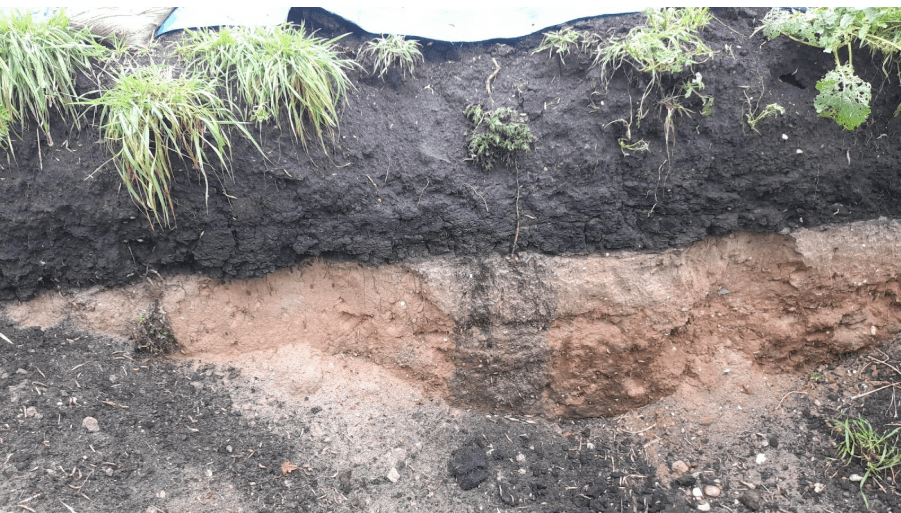
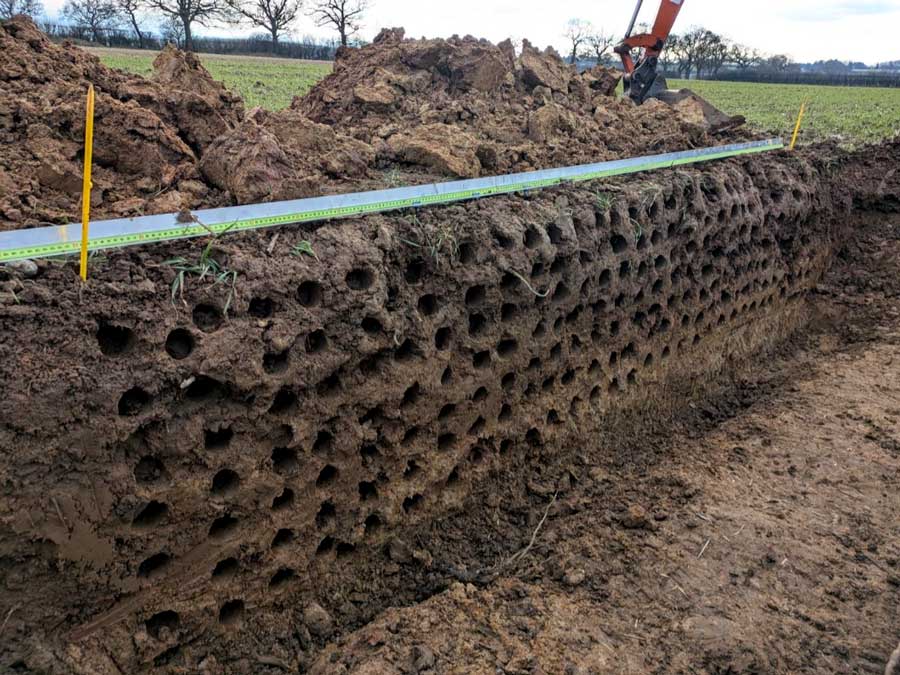
We study how soils form, function, and support life—from food production to carbon storage and biodiversity. Our work improves how key soil properties such as bulk density, compaction, and carbon content are measured, replacing assumptions with direct, high-resolution data. This helps identify where interventions like subsoiling are truly needed, reducing costs and environmental impact while advancing sustainable soil management.
Field Surveys
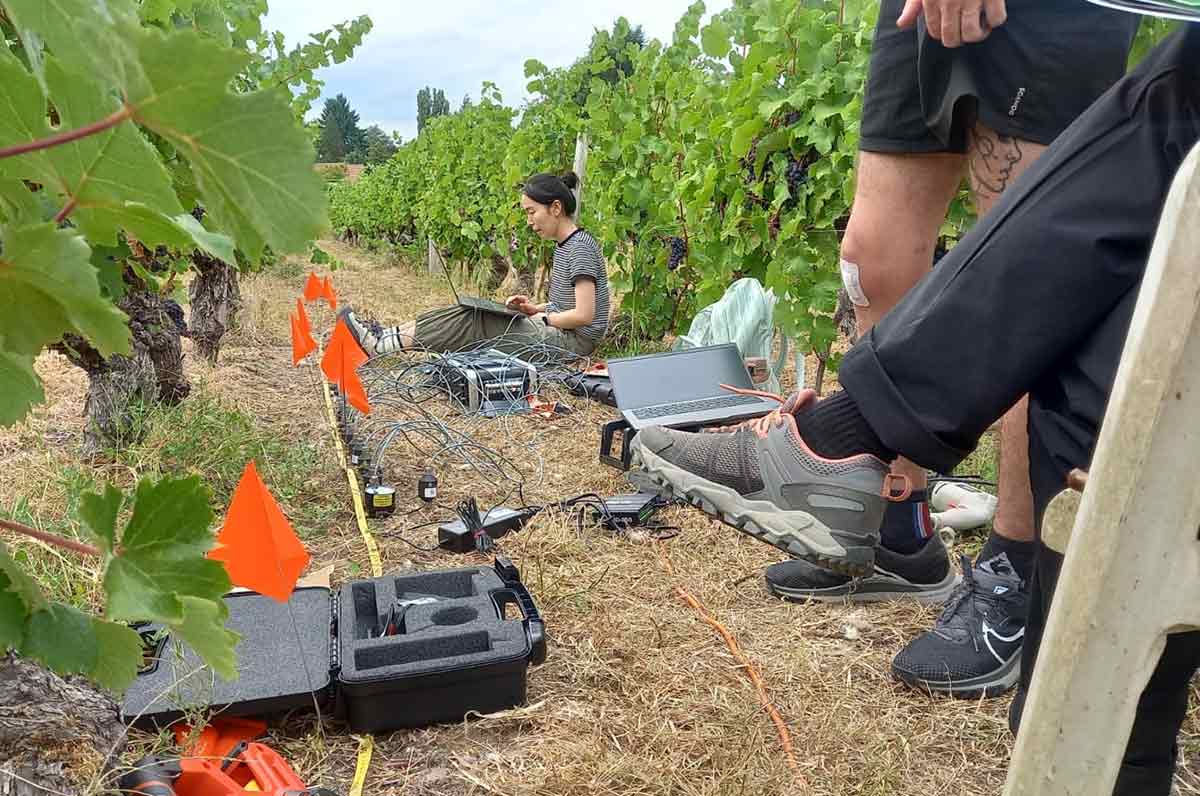
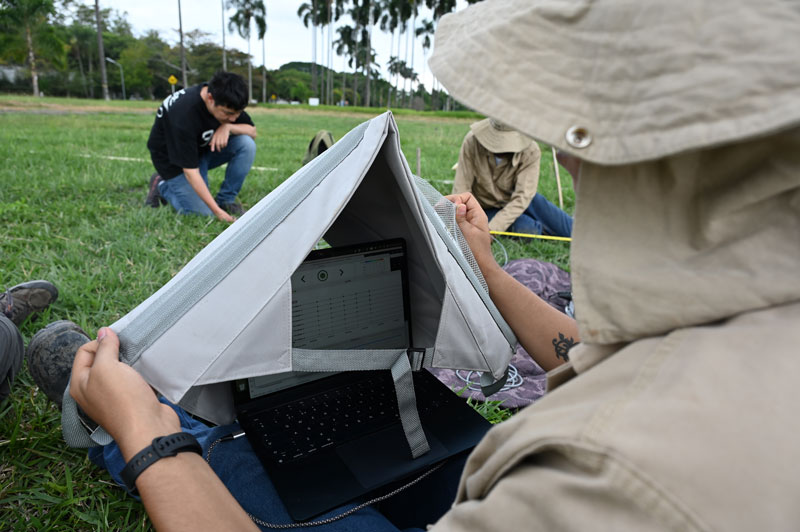
We carry out soil surveys across the UK, Kenya, Colombia, and France, with plans to expand across Europe and the US. Using gentle seismic methods and advanced sensors, we create detailed 3D images of the subsurface. Our custom software streamlines data collection, while secure cloud and decentralised storage ensure reliable, ethical data sharing.
Seismic Analysis & Modelling
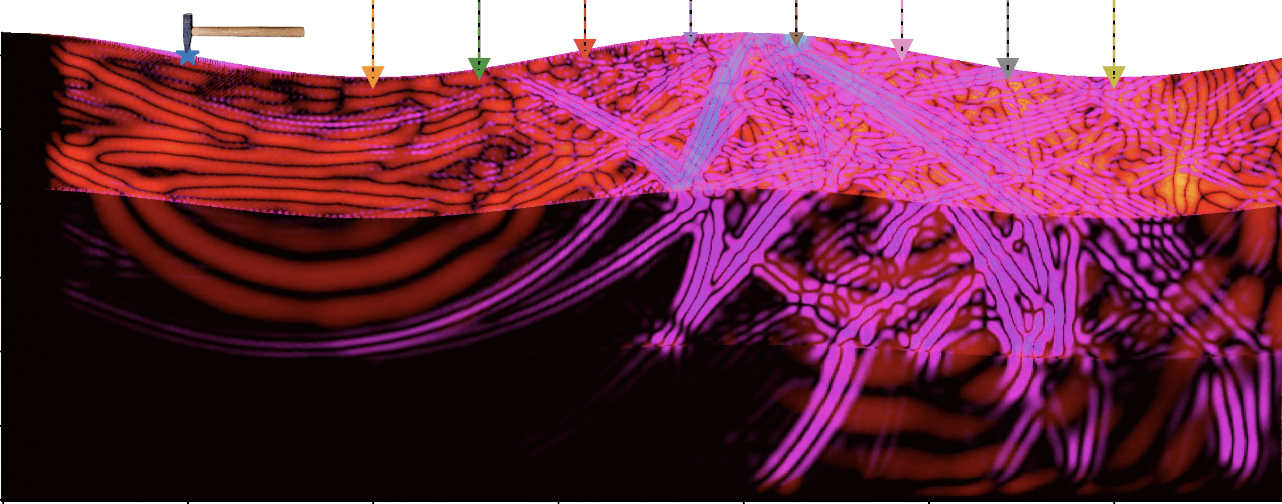
We use seismic waves to reveal how soils behave below the surface, turning vibration data into detailed 3D images of soil structure and condition. Automated processing and modelling allow us to measure key properties like density, moisture, and porosity without disturbing the ground, forming the basis for a digital twin of soil systems and faster, non-invasive soil health monitoring.
Resistivity and GPR Analysis
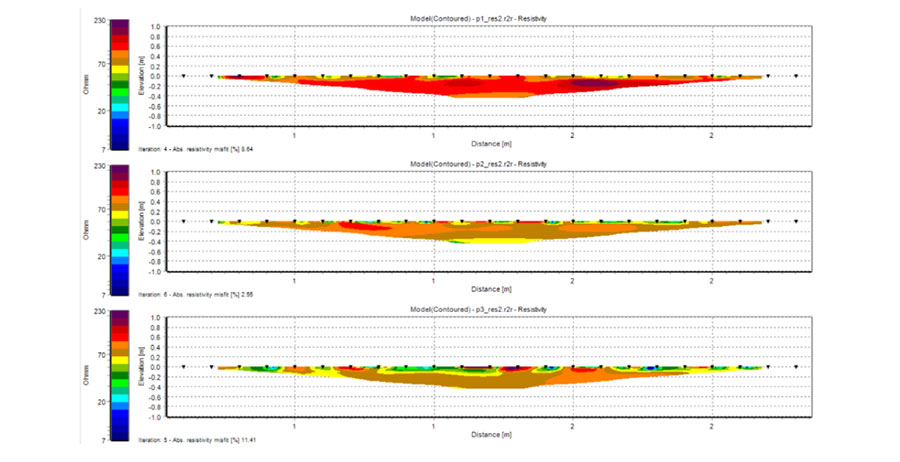
We use resistivity and ground-penetrating radar (GPR) to map soil structure and moisture in fine detail, complementing our seismic work. These non-invasive, high-resolution methods reveal variations in soil composition, compaction, and root systems without disturbing the ground. By integrating resistivity and GPR data with seismic measurements, we improve subsurface models and support more precise, sustainable agricultural practices.
Sensors
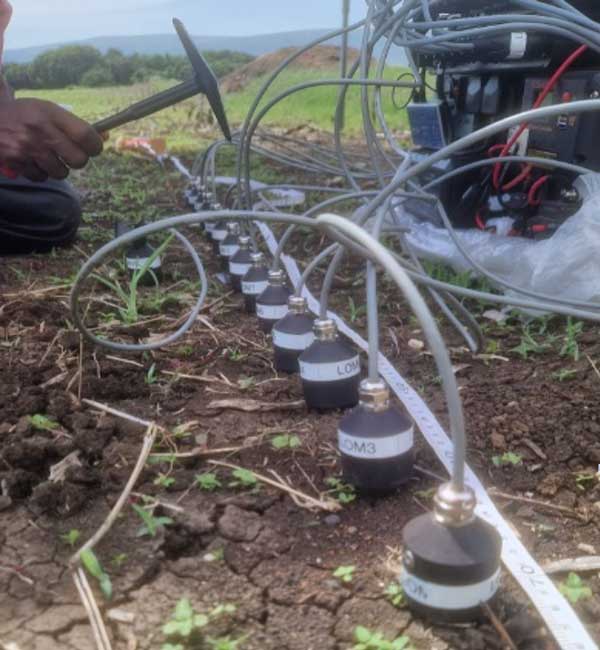
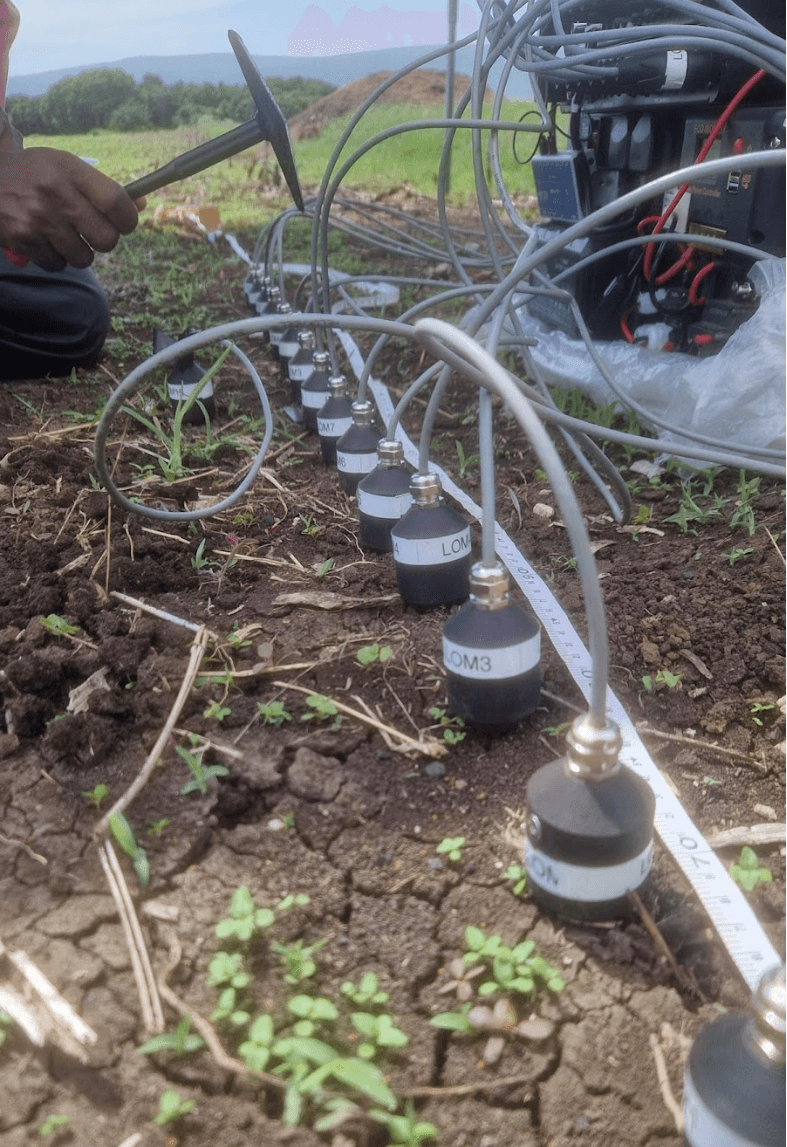
We develop and test a wide range of sensors to capture fine-scale soil vibrations and environmental data. From professional seismic nodes and fibre-optic systems to our own low-cost MEMS prototypes, we’re advancing tools that make soil monitoring more accessible and scalable. Our goal is to enable real-time, high-resolution soil observation for researchers, farmers, and eventually, citizen scientists worldwide.
AI & Machine Learning
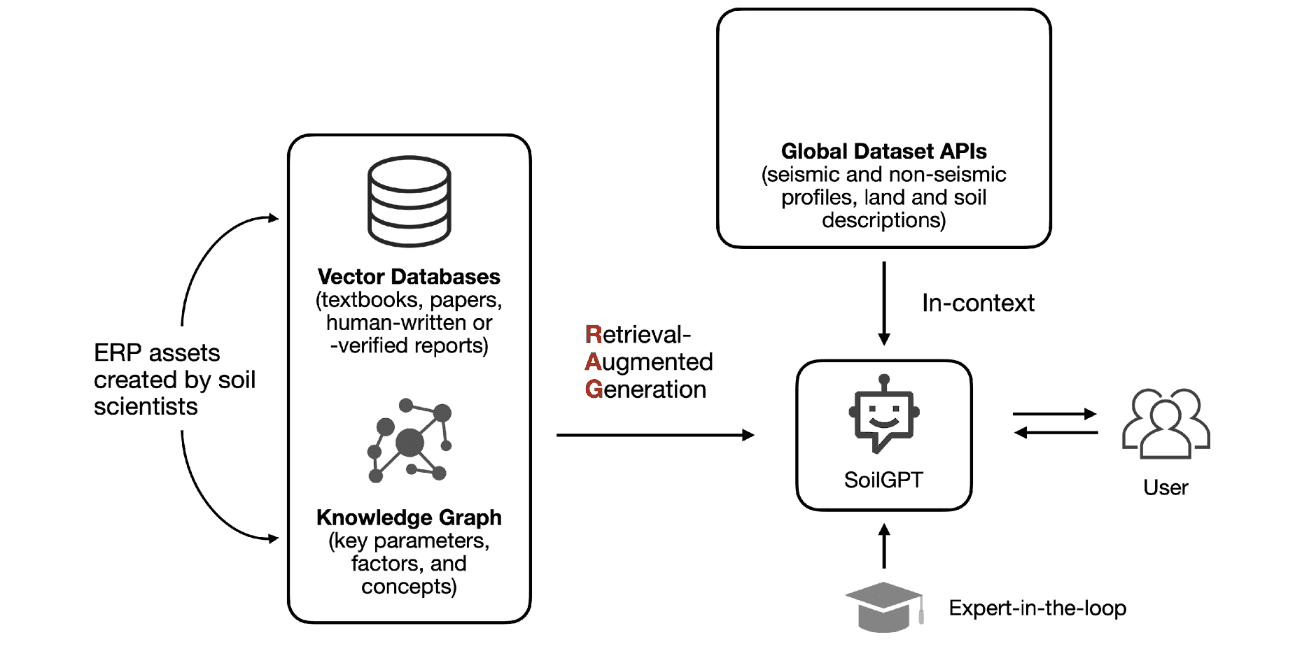
We harness AI to connect soil science, physics, and local knowledge, creating smarter ways to interpret complex soil data. Our machine learning systems integrate diverse datasets—from soil chemistry to seismic signals—into unified, accessible models. Through tools like SoilGPT, we aim to make soil insights searchable, interpretable, and useful for scientists, policymakers, and farmers alike.
Applications
We apply our methods to real-world questions in agriculture, ecology, and land management. Current studies explore soil compaction, deep carbon storage, root systems, and the impacts of farming practices, vegetation, and wildlife on soil health. From vineyards to peatlands, our research connects soil dynamics to broader ecosystem and climate outcomes.