Can a £1 chip tell us what's beneath our feet? How tiny MEMS sensors are scaling up soil health monitoring

Jiayao Meng
Research Scientist
Monitoring soil health on a massive scale requires tools that are affordable, non-invasive, and highly scalable. To achieve this, the Earth Rover Program is developing a new generation of wireless sensors using MEMS accelerometers. In this blog, I will explore how these cheap, tiny chips are replacing bulky, wired traditional sensors to scale up high-frequency "Soilsmology" surveys and equip farmers worldwide.
Hello everyone! I’m Jiayao Meng, a researcher working on sensor technologies in the Earth Rover Program (ERP).
Trained as a civil engineer from my undergraduate studies all the way through my PhD, I have spent years studying massive engineering structures, for example, high-rise buildings, long-span bridges, and floating offshore wind turbines. It has always been fascinating to me to predict how these complex dynamical systems behave and interact with their surrounding environments.
It occurred to me later that a single handful of soil constitutes a system that is no less complex than those massive engineering structures I had been working on. In fact, because of its microscopic complexity and biological diversity, our knowledge of soil remains surprisingly limited.
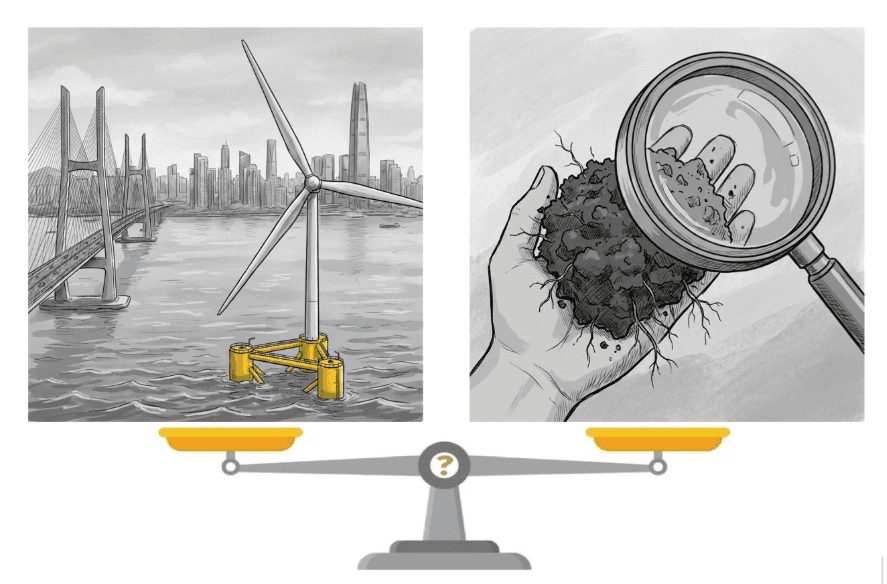
Figure 1: A handful of soil is not necessarily less complex than massive engineering structures. (Source: Author's own, with the help of Gemini)
Driven by curiosity, I decided to shift my focus from giant engineering structures to the shallow and living top layers of the earth. But to understand the soil, we first need a way to "see" into it. If we add the strict constraints that our tools must be non-invasive, affordable, and scalable, our options narrow down drastically. That is what led the ERP team to high-frequency seismic imaging, a novel technique we call "Soilsmology."
The High Frequency Challenge
In civil engineering, we generally deal with very low frequencies. When a long-span bridge sways in the wind or a floating wind turbine rocks in the ocean, we are usually looking at frequencies of less than 1 Hz (one cycle of vibration per second). But in soilsmology, we aim to capture tiny, subtle structural details of the shallow topsoil so that farmers can make better agricultural decisions. To capture data at this microscopic scale, we have to handle frequencies above 1000 Hz.
This shift has been a major engineering challenge for me, but an enormously exciting one. Today, I would like to take you behind the scenes. I will show you how we currently listen to the soil, the bottlenecks we face, and the exciting new sensors we are building for the future.
Current Instrumentation: Geophone Sensors
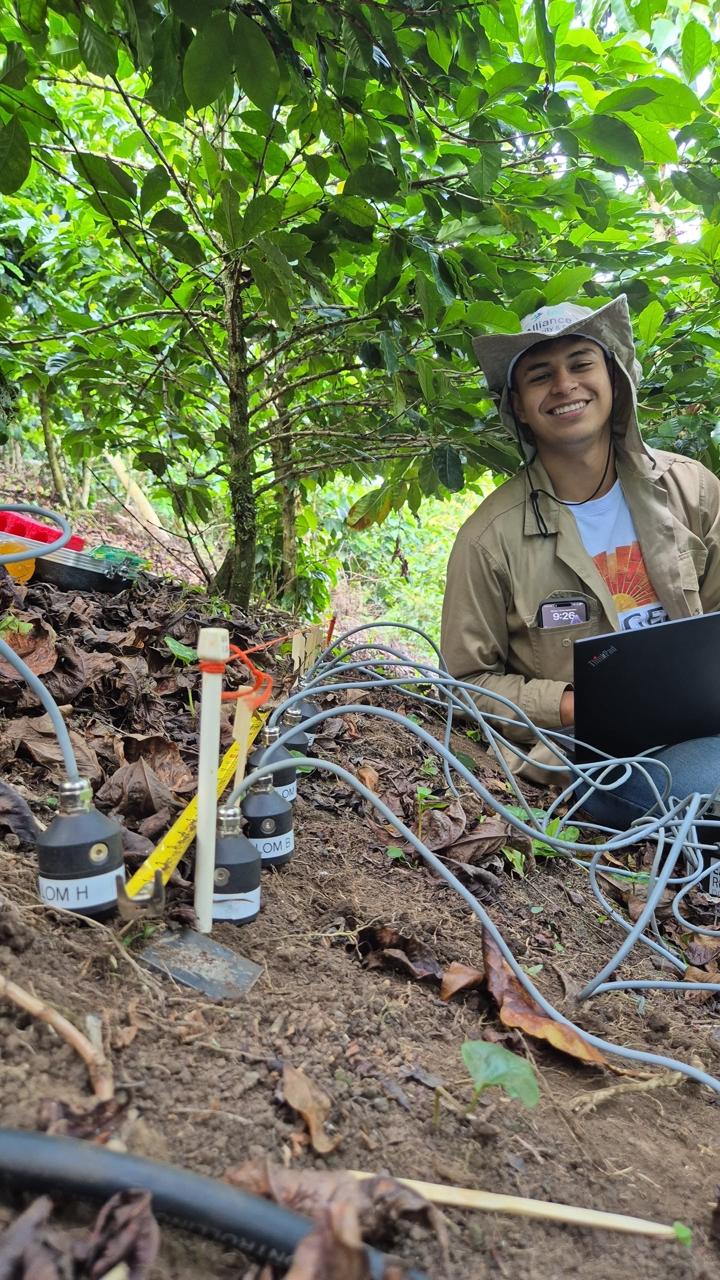
Currently, our team uses traditional geophone sensors, specifically the LOM Geofon, as "ears" on the ground. Think of them like highly specialised stethoscopes pressed against the skin of the earth. Just as a doctor taps a patient's chest to listen for echoes within the body, we strike a ground-coupled metal plate with a sharp-ended hammer to generate mechanical waves travelling through the soil, and the LOM geophones listen.
My colleague Joe Collins uses this exact setup at the Conservation Agriculture Systems Experiment at Harper Adams University. It is also what Morine Wangechi uses to run non-invasive soil seismic field surveys across diverse Kenyan agro-ecosystems.
While these traditional geophones provide high-resolution vibrational data, they are bulky, expensive, and they require cables to send data through to the main acquisition system. To truly scale the “Soilsmology” technology up to massive agricultural fields, we cannot rely on hundreds of these LOM geophone sensors and miles of cables. We need a solution that is smaller, cheaper, wireless, and hopefully, smarter.
The Future is with MEMS
This scaling challenge is exactly where my work comes in. I am currently developing a new network of sensors based on MEMS (Micro-Electro- Mechanical Systems) technology. You might not be familiar with the name, but MEMS accelerometers have been part of our everyday lives for decades. You can find these tiny devices inside your smartphone, your wireless earbuds, commercial drones, and even systems monitoring the health of machines and bridges. Figure 2 shows the top five manufacturers of MEMS accelerometers and what their flagship products are used for.
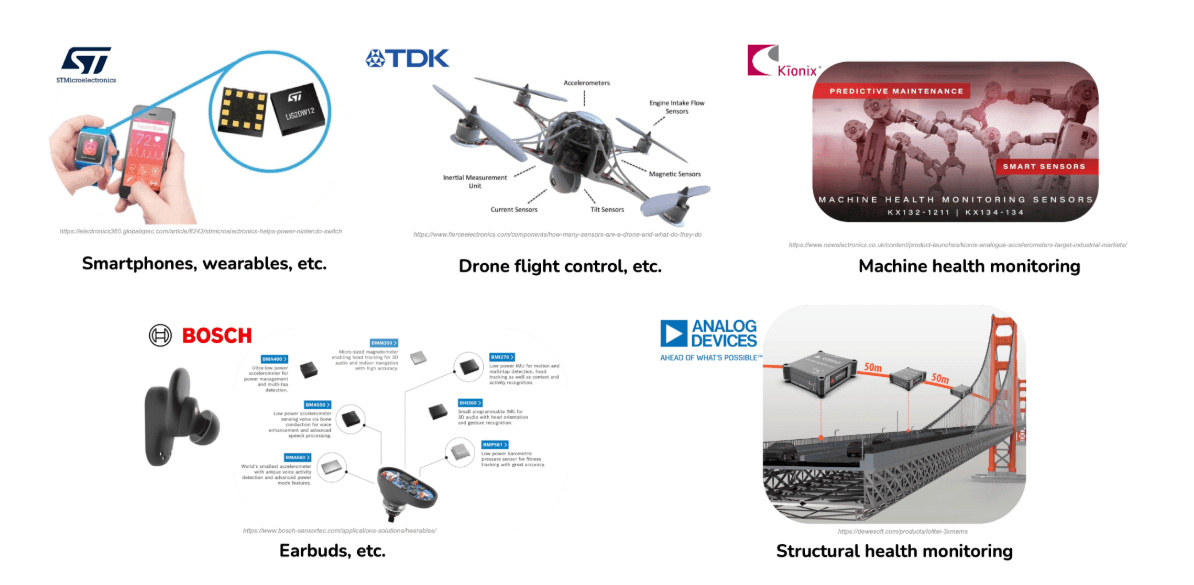
Figure 2: Top five manufacturers of MEMS accelerometers and the application of their flagship MEMS chips. (Source: Author's own)
Instead of relying on heavy magnetic coils and physical wires like a traditional geophone, a MEMS sensor uses microscopic mechanics etched directly onto a miniaturized silicon chip. To give you an idea of just how small this technology is, take a look at Figure 3. The “dirt” inside the circle is the world's smallest MEMS accelerometer chip resting in the palm of my hand!
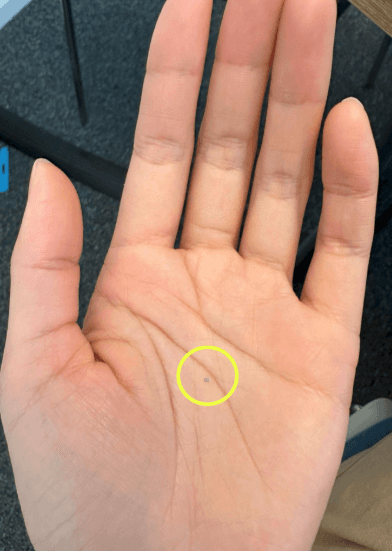
Figure 3: An example MEMS accelerometer chip, BMA580, used in ERP’s sensor kits. (Source: Author's own)
In addition to their miniature size, MEMS accelerometers are significantly more affordable. A MEMS chip costs anywhere from £1 to £13, compared to £100 to over £1000 for traditional vibration sensors. This vast price drop is the key to unlocking large-scale soil monitoring. To make sure that the MEMS sensors can accurately capture the high-frequency waves propagating through the soil, we generally need MEMS chips with wide bandwidth (capable of reading higher than 1000 Hz).
Wireless Sensor Prototype: A hobbyist's recipe for soil health monitoring
With these affordable MEMS chips, we are finally able to transition our soilsmology system from a wired, bulky array into a seamless, wireless sensor network. Imagine a farmer walking through their field and dropping a few tiny wireless pegs into the soil. These pegs would sit quietly, capturing high-frequency wave propagation in the soil, and sending real-time data directly to a smartphone or a farm management dashboard.
If you are a DIY electronics hobbyist or a maker, you can almost think of our wireless sensor kit as a tech recipe. Here are the "ingredients" we integrated into an example of a smart sensor kit (see Figure 4):
Vibration sensing: A high-bandwidth MEMS accelerometer (like the KX122-1037 in our prototype) to actively capture those high-frequency ground vibrations.
Environment sensors: Standard, low-cost sensors to track ambient temperature, humidity, pressure, and soil moisture.
GPS & Timing: A basic GPS module for precise location tagging and microsecond-level timing.
Brain & storage: A low-power microcontroller paired with a MicroSD card module for local data storage.
Wireless Communication: Remote connectivity to transmit data instantly to a web-based field dashboard.
By combining these accessible components, you would create a system that enables high-performance soil monitoring at a fraction of the cost of traditional setups.
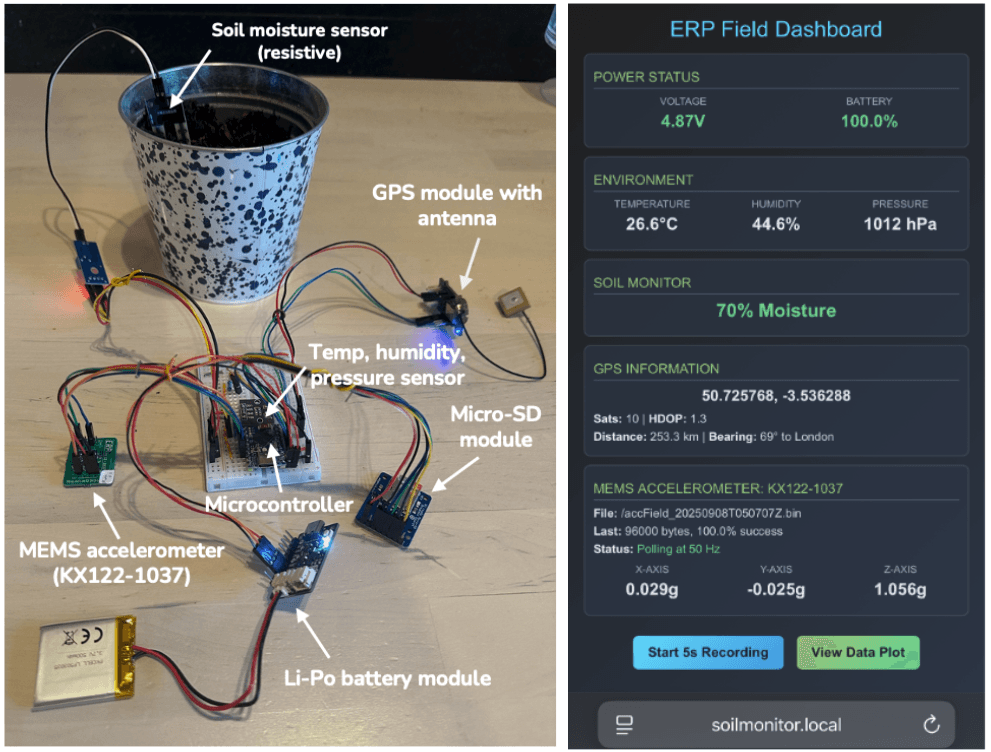
Figure 4: An example MEMS sensor kit and web-based field dashboard. (Source: Author's own)
From Lab to Field
Of course, using a £1 chip instead of a £1,000 sensor comes with trade-offs. MEMS chips naturally have a higher noise floor than traditional audio-grade geophones. Think of it like using a stethoscope that has a faint, constant background hum, which makes it harder to pick up weak signals. Because of this, our MEMS sensors require a slightly stronger hammer strike to ensure the signal travelling through the soil isn't buried in that background noise.
To accurately characterise this threshold and understand exactly what our MEMS sensors can "hear," they must be rigorously tested and calibrated. Once we are fully satisfied with the performance of the MEMS sensors in the highly controlled environment of the lab, the real fun begins.
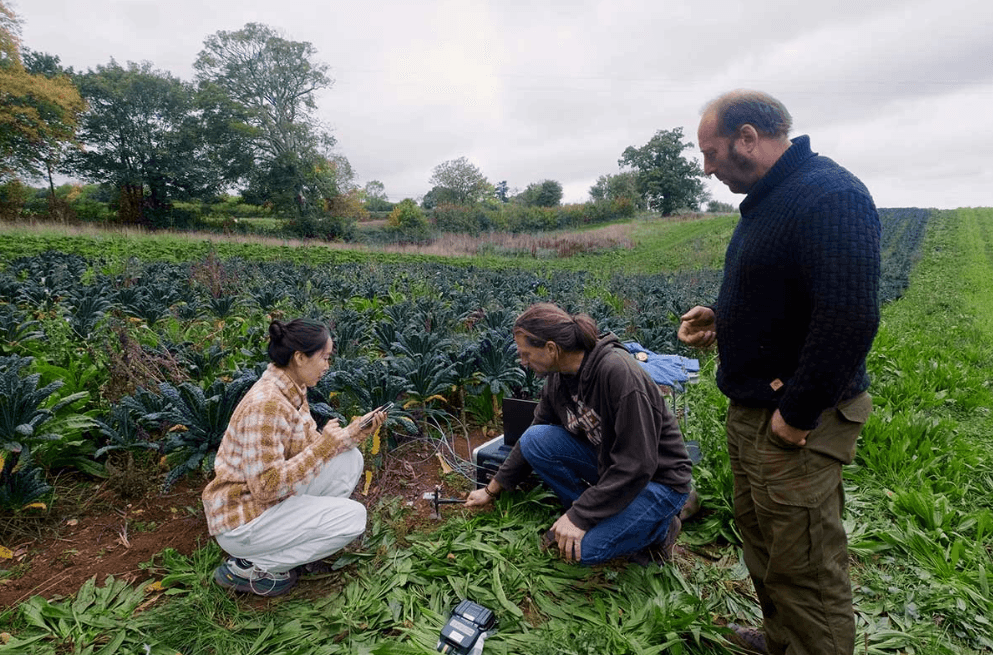
We are lucky to be partnering with Roddy Hall, who is very happy for us to conduct our upcoming field testing on his farm in Devon, UK. Out at Roddy's farm, we will be able to test these wireless sensors in real-world agricultural conditions. We will face the challenges of weather, variable soil compaction, and perhaps the noisy environment of a working tractor. This field testing is the critical next step. It will help us bridge the gap between a successful laboratory prototype and a reliable tool that farmers can actually use.
Figure 5: A field trip to Roddy’s organic farm in Devon, UK. (Source: ERP)
The Road Ahead
We are currently deep in the development phase and steadily progressing. Every day, we are integrating new features into the network, optimising power consumption, and fine-tuning our circuit designs, all to make the MEMS sensor networks more reliable and robust.
We can't manage what we can't measure, and we're building the tools to change that. Soon, we hope to provide farmers around the world with an affordable, non-invasive, and scalable way to look beneath the surface of their fields. This will greatly increase our understanding of the soil, build confidence in field management decisions, and ultimately contribute to healthy, regenerative soil—for the planet and for ourselves.
To stay updated on our progress on hardware development, be sure to follow the Earth Rover Program on LinkedIn or subscribe to our newsletter!